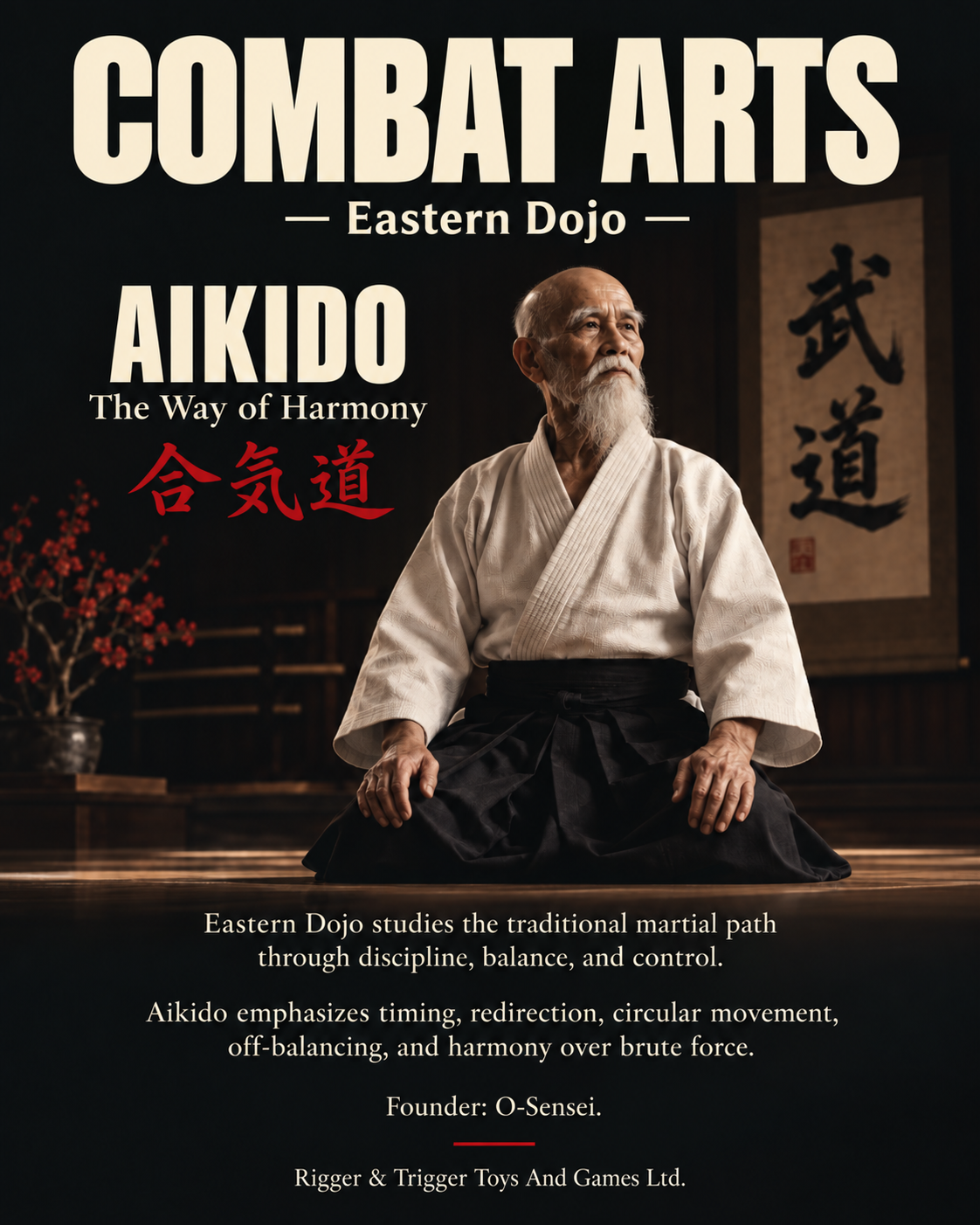
AIKIDO — The Way of Harmony
合気道
Aikido is studied within Combat Arts — Eastern Dojo for its sharp entries, redirection, balance breaks, weapon-influenced movement, circular technique, and traditional martial structure.
This path explores awareness, timing, control, distance, and the ability to meet force with a structured martial response. Aikido also maintains an important relationship with traditional Japanese weapons, including sword and staff principles that influence its footwork, turning, entries, and circular movements.
Within Combat Arts, Aikido represents self-control, disciplined training, and the responsibility to approach martial practice with knowledge, understanding, and respect.
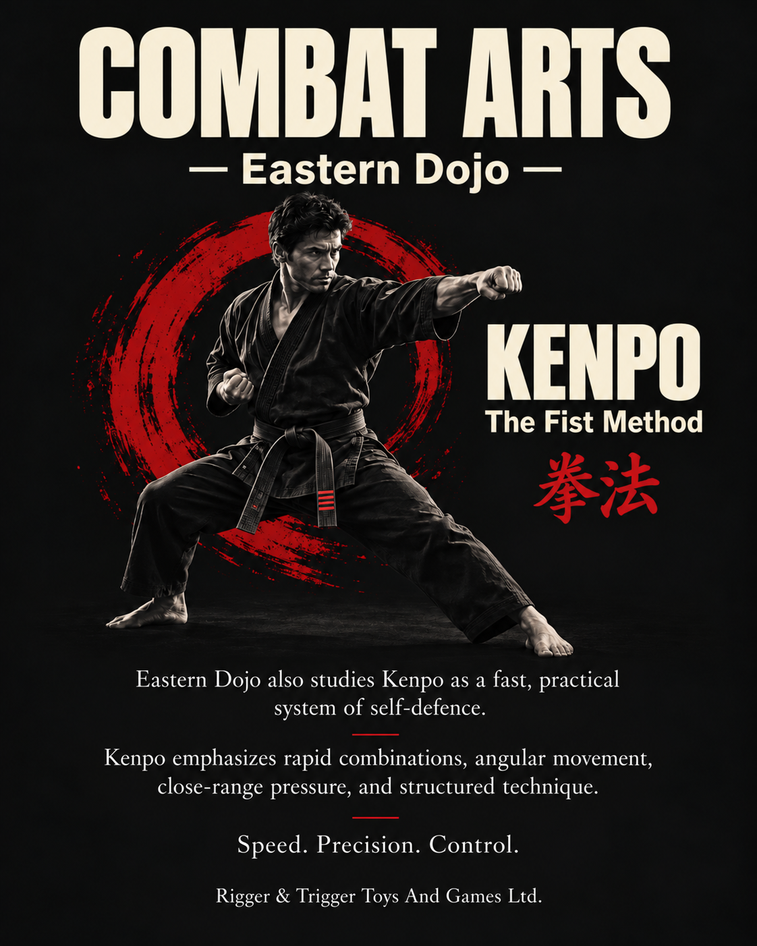
KENPO — The Fist Method
拳法
Kenpo is studied within Combat Arts — Eastern Dojo for its rapid combinations, hard impact, close-range pressure, timing, striking rhythm, and structured self-defence.
This path explores fast combinations, close-range responses, direct movement, and the responsibility that comes with martial power. Kenpo brings explosive energy to the Eastern Dojo through striking, rhythm, pressure, and practical martial structure.
Within Combat Arts, Kenpo represents sharp movement, focused discipline, and the ability to act with purpose under pressure.